Although Revolutionary, WiTricity is a Technology We Cannot Adopt
Reducing wireless energy transfer to practice through resonant evanescent coupling by Prof. Marin Soljacic and others at MIT has raised some interesting criticisms. For example, my blog post, “MIT Team Invents ‘WiTricity’ Wireless Energy Transfer” received the following reader comment from a fellow named Larry:
“How does this sit with the world’s energy problems? On the scale that this is envisaged to be applied, the losses are enormous,” said Larry. “Further, resonant coupling is nothing new; e.g. RFID. The MIT folks should be embarrassed, putting out nonsense like this.”
The later portion of Larry’s comment was echoed by others who wrote into Physics Today after WiTricity was announced to punch holes in the concept. Resonant coupling, they say, is not new. Once such letter representing this criticism appeared in “Unwired energy questions asked, answered” in September 2007.
Physics Today allowed the MIT researchers to respond: “Resonant-electromagnetic-induction technology has been inadequate to efficiently power, over mid-range distances, devices that require on the order of tens of watts of power or more. Our work demonstrates that it is the physics of strong coupling, for which resonance is a prerequisite, that enables the efficient wireless energy transfer needed for larger power applications.”
As a scientist, I stand by my original blog commentary. The resonant evanescent coupling work by Soljacic, et al. is fundamentally different than any pre-existing wireless energy transfer technique. However, as an engineer, I cannot counter the first portion of Larry’s criticism; WiTricity wastes energy.
According to Soljacic’s original article, the energy transfer efficiency of the WiTricity technique is about 40% over a 2-meter distance. Achieving global energy sustainability is a problem that will only be solved by attacking on two fronts: 1) improving renewable generation technology AND 2) improving end-use efficiency of energy utilization.
Unfortunately, I am forced to side with Larry on WiTricity. If this technique truly dissipates 60% of the input energy, we must elect to pass on WiTricity and be content to continue charging our laptops with hard-wired connections.
netsight commented:
Ouote:"newb commented: so who is going to pay to put all that shat is the roads and such…. YOU!!!!!!"
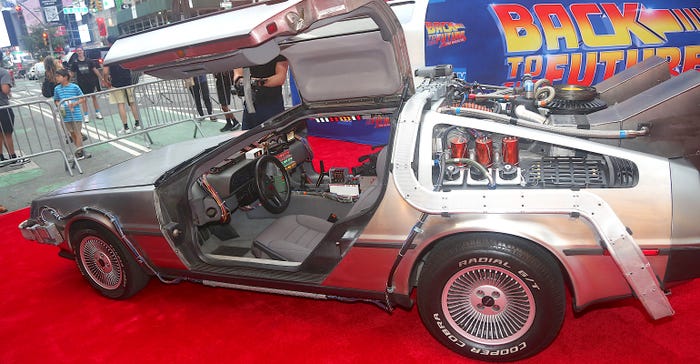
It's no different than paying for gas. If the government decided to go with such a scheme it would probably be funded from tax revenue, this would cover the development cost. If it means skipping a few rocket launches for the space program (think about a billion or so) to do something like this then I'm all for it! After all tax payers funds should be spent on things that are beneficial to the greatest number of people as possible. As far as utilizing a chain of solar panels as the power feed it would probably be the most expensive way to electrify such a wicricity-highway. Utilizing the national grid like electric trains would be the easiest and most cost efficient process. The main focus would be for governments deploying this scheme to subsidize the energy sector and their efforts to explore cheap base loading clean energy sources such as geothermal and recycled nuclear isotopic batteries RTG's. The hyperion Radio Thermal Generator(hyperionpowergeneration,com)is the first step in this process. Because it runs on the waste isotope/fuel rods material from the main nuclear plants it does not require the chain reaction effect to harness its nuclear energy, just the residual heat form the spent fuel rods byproducts which is converted directly into electricity via thermocouples,it also has the weapon grade uranium removed. The manufacturer claims that the energy generated by a single Hyperion Hydride Reactor is approximately 27 MW. This is more than five times the output of the strongest wind turbine in the world and it works day and night, not bad for a battery about 3 by 3 meters in size. The thing I like the most is the fact that it reclaims the energy wasted in the storage pools in conventional nuclear facilities thus reducing the need to run main stream potential Chernobyl type reactors. I guess this would be the closest thing to the fictional "Mr Fusion" generator in the DeLorean from the Back to the Future 2 movie.
well you know what they say: "today's science fiction eventuality becomes tomorrows science fact"
.
netsight commented:
I agree with Webwork on this I also though of this concept and I'm here because of it. From an engineering and economics point of view a witricity vehicle wouldn't require major storage of electricity so it would be cheaper to manufacture an e-tag 'meter as you use' system could be in place and road embedded coils would be activated by the presence of your e-tag thus preventing power theft from the operators. Governments could lead the way in funding a project and offer incentives to oil companies or similar to supply electricity to the system. BP solar getting quite popular now just as an example. Witricity coils could be constructed with periodic breaks (mainly at traffic stops) where one could receive a brief charge until the next coil segment thus effectively stretching the length of the 'wicricity-way' without stretching the cost. On the physics/engineering side this type of electric vehicle will yield and surpass the power response and toque you achieve in a combustion engine due to the simple fact that your power could match the potential chemical energy to weight ratio of petrol-gasoline. Such volume of power from the pick up coil is merely
transmitted on demand so you deferentially won't feel like your driving a gulf buddy, A draw back currently facing conventional electric vehicles and not to mention there cost.
In a nut shell A future 'electron' economy utilizing Witricity powered vehicles is the only realistic technology for large scale transit populations that can offer a cheaper alternative than hydrogen fuel cell or lithium-ion cell type vehicles that are expensive to buy, inefficient by their physics.
and are not economically variable yet alone profitable as 'alternative fuel' economies.
netsight.pbwiki.com
newb commented:
so who is going to pay to put all that shat is the roads and such…. YOU!!!!!! guess what…. this will not happen for many many years until we can release this energy from towers at extremely efficient rates… then put receivers in the mobile devices and cars and such.. then we will be good and witricity will rule
2stepsAhead commented:
Nicely said webwork.
WEBWORK commented:
Imagine this, that passing trucks & cars absorb electricity from the roadside
as they travel remote highways lined with solar cells. The distance from the car underside
and the witricity coils embedded in the roadway could be less than 12 inches.
This would provide for a transmission efficiency of up to 95%. Even at 50%
the energy tansmission then becomes economical because the cost to
transmit the energy particularly for remote areas is greater for standard methods.
Trucks could also give and take energy as they pass, for example a continuous stream
of trucks passing a solar farm outside the city could retransmit the electrical
energy back into the city grid when they reach it. Passing cars could also BUY electricity
from mobile sellers. The fact of the matter is the WITHOUT using Witricity mankind is
losing energy.
Sponsored Content
Design News Partner Zones
Light Matters: The Unsung Heroes of
Modern Health Care
First, let's define "no-compromise." In an ideal configuration, this lamp would use a high-brightness LED (HBLED) that is built into a small, integrated package and is able to produce a large quantity of focused light, operate with a high level of reliability and generate no audible noise. Is this difficult? Yes, but it is possible.
Read More
Design Engineers' Portal for Sensing and Machine Safety
Whatever industry you're in, or whatever product you manufacture, the right sensors to automate your plant, and to improve your overall efficiency, quality and safety are a must. You'll find Banner Engineering to be an amazing resource of products, training and people with expertise.
Test & Measurement World Machine Vision & Inspection Report
Topics include machine-vision software, Power over Camera Link, thermal imaging and frame grabbers. Read More