Bailing out GM, Ford and Chrysler: it's easy to be dubious
>Like many Americans, I have mixed feelings about a government bailout for the domestic auto industry and more specifically, General Motors (GM). At first I was for saving G.M. and while I still would vote that way, I have some reservations.
First, the fairness argument doesn’t wash. The logic is if we bail out the financial industry, we should rescue car makers, too. But we are propping the financial industry for one reason and that is to save an ailing financial system, the foundation of a functioning economy. Treasury secretary Hank Paulson’s work isn’t out of the goodness of anyone’s heart. Rather, we all have an interest in a functioning financial apparatus. Short of that, get a gun and a case of soup.
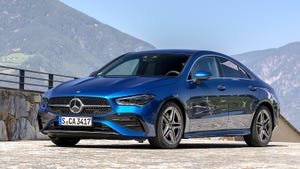
Strike two is the arrogance of General Motors over the years. While Toyota and Honda inspired loyalty through smartly-designed, practical and reliable vehicles, GM often made junk by comparison. UAW head Ron Gettelfinger said this morning on the radio Detroit now makes cars “second to none,” but it takes decades to beat the bad rap. A commentator in that same radio report remarked how a premature “huge auto repair bill” can sour a car buyer forever (the odometer on my 1999 E320 turned 200,000 on the way to work this morning, a first for me).
And GM’s over reliance on gas guzzling SUVs and pickups exhibited a stunning lack of foresight not to mention a Neanderthal attitude toward the environment. Did GM make the SUV market? Or did consumers really want them? It doesn’t matter.
Now, we’re being bombarded with the scare statistics if Detroit shuts down: 3 million jobs and $156.7 of income would be lost in the first year; auto production worldwide would by harmed by bankrupted suppliers and governments would be swamped with unemployment and healthcare claims. In short, the argument to let GM slip it so it would get out from under its onerous labor agreements would be a debacle piled on the disaster we are already living through.
But many if not most products invented here and once made in the U.S. have migrated overseas: TVs, computers and all manner of electronics, household goods, clothes, shoes and textiles. The domestic automotive industry that once ruled the world has been ebbing away for 40 years. Wouldn’t a bailout simply forestall the inevitable?
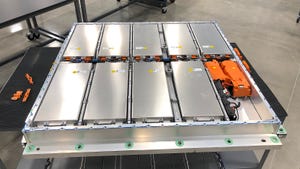

Maybe, but shutting down the auto industry risks too big a shock for an economy that is already reeling. The loss of innovation and engineering jobs would be staggering given the myriad technologies in today’s vehicles and more importantly, the opportunity to rewrite the book on fundamental propulsion systems. With all the choices, who would you buy from - a car company in Chapter 11 which might be unable to honor the warranty or a solvent auto maker? The answer is obvious.

The soft economy is hurting all the car companies, but less the ones that have the right mix of products. That dealer lots are full of unsold large pickups even with the reprieve of gas prices should surprise no one, especially the management at GM. But just think how far GM has come with the Chevy Volt. A few months ago, it de-emphasized pickups and trumpeted the Volt, which seems to have put it on the right track.
It is not in the nationalist interest to cede cutting edge development of potentially lucrative intellectual property and the jobs that go with it. There’s only so much technology in a pair of shoes. A car is a rich complex of transferable technologies.
Yes, the bailout should go through with an emphasis on sustained viability and return for the taxpayer’s investment. I would have no problem if the funds called for an executive overhaul. My colleague Charlie Cooper at news.com jumped on board NY Times scribe Tom Friedman’s suggestion that Apple phenom Steve Jobs take over helm at GM. It’s not as crazy as it sounds. Nothing is right now.
Consider, too, that we have colossally short memories. In 1994, Jack Smith, a diminutive and impatient bean counter staved off bankruptcy at GM. His helper and heir apparent? GM’s current CEO and Chairman, Rick Wagoner who has admitted his biggest errors were killing the EV1 and not faster pursuing hybrids sooner.
aussie commented:
Hey ! Lets bail out all the struggling firms so there's a reward for mismanagement of a company, it's a win win for all that overstretch in the so called free trade market....
Chuck commented:
I have been a Detroit Automotive Engineer for over 20 years. Let's get some facts corrected concerning the Auto industry in North America.
1) Honda, Toyota, Nissan, etc.. all build vehicles in the good old USA using USA labor, manufacturing, engineering & know how. The profits may go to Japan, Korea, or Germany, but the jobs do not necessarily all go overseas.
2) Intellectual Property. Toyota has a tech center in Ann Arbor, MI. They employee several thousand American engineers. Honda has a tech center in Marysville, OH. They employee several thousand American engineers. Nissan has a tech center in Farmington Hills, MI. They employee several thousand American engineers.
3) Auto Tiered Suppliers. The majority of Auto jobs are not with the OEM's - they are with the suppliers. Lear, Johnson Controls, Magna, and even Delphi (formally GM), and Visteon (formally Ford) each supply both the big 3 and the foreign OEM's with plants in the USA. These jobs do not go away. In many cases, these suppliers would be just as happy supplying Toyota rather than GM.
4) Very few technical people are involved with planning what the next generation vehicle will look like. Big 3 OEM Styling, Marketing & Executive teams typically pick the platform, target customers, etc.. then, engineers get to figure out how to design & build the insane goals they are handed.
I work for a major Tier 1 supplier that sells parts to the Big 3 and to Japanese, Korean, & German manufacturers. Today, I'd rather work on a Toyota or Honda project, than a Chrysler, GM, or Ford project. The Toyota or Honda projects are better managed, make more sense, and do not leave you scratching your head at the end of the day wondering why you had to design something that just did not make sense.
This has not always been the case. A decade ago, I'd much rather work on a Big 3 project as they made more sense that any overseas OEM project.
If we are discussing a bail out & an Big 3 Auto industry overhaul, let focus on shutting down the current method of new vehicle development & planning. Let's focus on actually listening to the American Auto technical folks about how to build vehicles.
Interestly, I believe the CEO's of the US Big 3 all have degrees and backgrounds in Finance. I believe the CEO's of the Japanese Big 3 all have either degrees or backgrounds of a technical nature. Henry Ford could build a Model T. Think today's US Big 3 CEO's would know how to change their own oil?
lestr commented:
People seem to forget what happened in the late 60's, early 70's. I still remember the gas lines and people pushing their cars to the pumps to conserve fuel. Notwithstanding, auto makers continued making gas guzzlers because, they thought, that's what the market dictates. Sad to say, the Japanese were more practical, proactive, and right on target when they started to build smaller, fuel efficient, and reliable vehicles. They are now on top of the heap. Detroit is still resting on its laurels, has acted irresponsibly and now wants us, they say US, to bail them out. This country was built on hard work, good old yankee ingenuity, and honesty. Detroit has of late fallen short on all of this. They have dug their own hole. Let them dig themselves out! And by the way, engineers are TOLD what to design and build, management is solely responsible for the direction in which a business goes.
Scott commented:
First of all, the car companies are asking for a LOAN, not a BAILOUT.
The Fiancial sector got a BAILOUT - handout, etc. No payback necessary - no need to fly to Washington to beg for money, just some phone calls to well-placed senators.
It got that way because of a lack of oversight on the government's part. The public is asking questions, and the senators are taking it out on Wagoner, Nardelli, and Mulally.
The current crisis with ALL of the automakers, Toyota and Honda included, is that potential leasing customers cannot get leases. This is a direct result of the financial market.
No manufacturing business with the supply chain complexity of the automotive industry; whether foreign or domestic, can withstand the kind of sales drop that was experienced this past year.
Also, does anyone remember the 'Keep America Rolling' zero percent financing that GM offered right after 9/11? That kept the American economy rolling in a major way. How quickly people forget.
Jazzy commented:
Many homes and everday blue collar workin pple would be effected. First and formost my family would be effected. My dad would lose his job and my stay at home mom would have to go working at some housekeeping job. College would be almost impossible for me to afford. I say since we are bailing out everyone else y not bail out gm,for and chrysler also bailout pple how are going thru forclosers.
Joseph commented:
It is really simple, let the oil companies spend some of their tens of billions of QUARTERLY profit dollars to bail out the companies that are helping to make them rich.
John Dodge commented:
I am for the bailout...especially after hearing the sound bytes from the Congressional testimony. Since when is taking away benefits and pay from auto workers a good thing? Maybe Toyota doesn't pay enough. GM can be faulted for a lot bad strategic moves as can Ford and Chrysler. Everyone was saying GM should have aggressively moved in hybrids years before it did. That's true, but we shouldn't let GM, its its workforce and those connected to it go down. There's a huge price to be paid for that. I say this as one from a state that has very little connection to the auto industry (Mass.)
Cosmic Central commented:
I say let them fail. Look at the bright side. Less people buy cars because they are unemployeed. Less cars are sold. Less cars are manufactured. Less carbon pollution to contribute to the climate crisis. Before you know it we will be below 1990 levels just in time to save the planet. Of course we will need to drastically change our lifestyles. But hey, that is better than a global catastrophe - is it not? Perhaps more of us should go back to agriculture; it is becoming more clear that industrialization was not a very good idea.
websmith commented:
What Congress, the Senate, and the President are arguing about is whether or not 10 million more Americans will lose their jobs and whether or not this country will maintain any manufacturing capability at all. If we lose 10 million jobs the loss of commerce will cost us 10 million more jobs and affect foreign companies and the ability of people to eat in 3rd world countries.
The unemployment costs to the taxpayers, should they fail to provide our automakers loans, will exceed $200 billion per year. Aside from all of the other issues that these armchair automakers are trying to cloud the issue with, it definitely is a no-brainer so, even these people should not be having this much trouble making a decision.
ewebsmith.com/gov/autobailout.html
BUSTER eck..7 commented:
#1 GO BK
#2 RE-ORG & DROP THE UNIONS
#3 USE TOYOTA & HONDA AS A TEMPLATE
#4 LEARN TO VALUE YOUR CUSTOMERS
#5 FOCUS ON GREEN...GREEN...GREEN!
#6 GM & FORD DON'T DESERVE TO BE REWARDED FOR BAD PREFORMANCE
David commented:
i alo need help i hjust found out that i have no med pay with my ins company so if any one can help a person in need write me at bugconv1962@aol.com i am a real person not a scammer
CHEMROLL commented:
Every manufacturer makes the products that are
most profitable. When conditions change he revises his products. GM should not be criticized for making the profitable large cars.
They are an invaluable asset of our country.
Sponsored Content
Design News Partner Zones
Light Matters: The Unsung Heroes of
Modern Health Care
First, let's define "no-compromise." In an ideal configuration, this lamp would use a high-brightness LED (HBLED) that is built into a small, integrated package and is able to produce a large quantity of focused light, operate with a high level of reliability and generate no audible noise. Is this difficult? Yes, but it is possible.
Read More
Design Engineers' Portal for Sensing and Machine Safety
Whatever industry you're in, or whatever product you manufacture, the right sensors to automate your plant, and to improve your overall efficiency, quality and safety are a must. You'll find Banner Engineering to be an amazing resource of products, training and people with expertise.
Test & Measurement World Machine Vision & Inspection Report
Topics include machine-vision software, Power over Camera Link, thermal imaging and frame grabbers. Read More