Skip navigation
Electronics Industry Search
Advertisement

Wind Turbines Not in my Back Yard

January 5, 2009

Everyone loves wind energy until someone wants to put a large turbine in their backyard. Just such a battle is playing out in next to my hometown.

Mark Richey, owner of a large woodworking business located in former plastic bottle plant where I once worked summers during college, has said he will begin erecting a 600- kilowatt 292-foot high turbine this week, weather permitting. That’s despite stiff opposition from neighbors which have appealed the City of Newburyport’s decision to allow the project to proceed.

Richey successfully navigated the sometime uncertain permitting process and received nearly $500,000 in a state grant to offset the cost of tower and turbine, which he claims will provide 80% of the electricity for his plant.

Richey’s enthusiasm for green energy is matched by his determination to see the project completed. He even visited the Elecon plant in India to witness his turbine being built.

Richey has also installed a biomass furnace that he claims saves $15,000 a month on his heating bill in the 130,000 square-foot building which I once helped paint when it was an Owens Illinois plastic bottle plant. The wind turbine will go the left of building in this drawing while the neighbors who find it objectionable are behind the building, across a highway and up a hill.

Neighbors fear issues like vibration, noise and shadow flicker (the video shows its hypnotic effects) from the turbine’s blades will hurt their quality of life and real estate values. The Wind Energy Industry Association has a Myths vs. Facts document that attempts to allay fears such a blade throw which was a problem in the wind energy’s early years (I have not heard and anyone being impaled by wayward turbine blades, but I suppose it could happen).

City fathers created an ordinance setting the ground rules for the wind turbines in the city, but now some city officials want to review it. It should be an interesting week for Mark Richey and the folks who want to derail his well-intentioned plans. Godspeed.

Posted by John Dodge on January 5, 2009 | Comments (1)

July 10, 2009
In response to: Wind Turbines Not in my Back Yard
windcatcher commented:

The Baker Wind Turbine is a major breakthrough in wind energy technology. The super quiet, Low Pressure Turbine is enclosed and 100% bird and people safe which allows the turbine to be installed and operated in close proximity to people. This eliminates the need for long transmission lines because the electricity is consumed close to where the electricity is generated. The 12 feet in diameter Model #3 Baker Wind Turbine is mounted on a car trailer and the unit is easily transported. Set-up is easy. The outriggers lift the turbine foundation and stabilize the turbine so that it can rotate 360 degrees. The fenders and tires are removed. No tower is needed; all that is necessary is a 6’ by 6’ wind flow. More efficient and powerful than a single dimension propeller driven windmill, this multidimensional wind energy turbine dynamic has never been seen before. Of course, the multidimensional turbine dynamic does not even resemble a single dimension propeller driven windmill. Google Baker Wind Turbine and two videos will appear; the longer video demonstrates the Low Pressure Turbine Dynamic.
Let me explain to you the basic turnaround in wind energy science and technology demonstrated by the Baker Wind Turbine. You don’t have to be a genius to understand wind energy.
First, the maximum amount of energy in the wind is directly in front of the wind. This is the basic and simple premise and is easily proven to anyone logically. (Aristotelian logic is the foundation of all science.) While standing in the wind, face the full force of the wind which is directly in front of the wind. Now, form both hands into a cup which represents a ½ round, cupped turbine vane with volume. Now, cross over your hands and form a blade with no volume representing a propeller driven wind mill. Which of the two forms catch more wind and has full thrust from the wind?
The first part of the equation is solved: The maximum amount of energy in the wind is directly in front of the wind and the best surface form to catch the wind and consequently, has more thrust and power, is a ½ round aluminum turbine vane with volume.
The second part of the equation is as logical. Which direction will the maximum wind catch area turbine vane turn? Naturally, the turbine vanes and rotor turn harmoniously in the same direction as the wind is blowing. This eliminates wind noise caused by turbulence. A propeller blade rotates sideways to the wind energy airstream which results in less power produced, noise from propeller turbulence and high stress on bearings and blades creating high maintenance cost. Propellers are so big; birds can’t see them and they have devastated wild bird populations. Check out the out of control wind propeller explosions on You Tube.
The third part of the equation is that the more cupped wind catch surface area that is directly in front of the wind, the more powerful the turbine. A single dimension propeller can only expand in size and power by increasing its’ diameter. The multidimensional Baker Wind Turbine can not only increase its’ power by increasing its’ diameter but can expand horizontally and add exponentially more wind catch surface area and power.
The Baker Wind Turbine has 144 cupped turbine vanes that are 3 inches wide (5 ½ inches of surface area). The 3 inch aluminum vanes give us 11 inches of weld at the cupped base. Each turbine vane has 1 1/2 sq. ft. of cupped surface area. This is important because the stress per catch area unit is low as apposed to a large catch area with a high stress attachment to the hub. No one turbine vane pulls by itself but pulls together with the other turbine vanes in a “gang”. This spreading of wind energy over the rotor maximizes the wind catch area and spins the rotor smoothly without vibration. Each turbine hub has 6 turbine vanes that are 6 ft. long. There are 24 hubs (6ft. wide) and there are 18 rows. Each row has 8 members that contain 48 lineal ft. of turbine vanes. At any given moment, the top section contains 108 sq. ft. of cupped wind catch surface area. As each row is assembled, they are progressively stepped which forms a horizontal twist. Twist is torque and torque is horsepower. The more twist, the more horsepower. Dividing the diameter into 18 lateral rows creates massive torque that is visible. For example take a wood screw and hold it sideways and turn it. You will notice that the screw is made up of one helix and 8 or more twists (or flights). The Baker Wind Turbine is Like the Archimedean screw but made up of 6 helixes with 8 twists which torque from right to left six feet. The overall dynamic of the Baker Wind Turbine is germane to High Pressure Turbine Dynamics but adapted to Low Pressure Turbine Dynamics which I am the inventor of and the Baker Wind Turbine is the test prototype. Just as Mr. Parsons’ invention of the high pressure steam turbine revolutionized steam power; the Baker Wind Turbine will revolutionize low pressure wind power.
The Baker Wind Turbine rotor has a lower surface to weight ratio than a propeller windmill so the rotor and shaft which weigh 660 lbs. begins turning on 1 or 2 miles an hour of wind and will operate smoothly and quietly in a 100 mile an hour wind at an estimated (920 R.P.M). High pressure steam and gas turbines operate at 20,000 to 50,000 R.P.M or higher; so in high winds the low pressure turbine dynamic is figuratively just loafing along. The Baker Wind Turbine not only has a wider range of operation but also produces more power at any given wind speed than a propeller driven wind mill and therefore the new turbine wind energy technology should rightfully outmode the old propeller driven windmill technology. The Baker Wind Turbine, like all major inventions, has a wide range of applications that will change roof top architecture, bridge design, ship design, high speed train (forced air) electric grid locomotives, forced air/ electric cars, parks, backyards, airports and all areas where the wind can be utilized in a natural or forced air environment. The turbine is enclosed so the housing can be easily painted to blend in with the surrounding area.
The last part of the equation is a little harder to grasp, even some engineers don’t get it straight. Those who defy convention and who can think individually in multidimensional terms get it right away.
First the single dimension. One assumption in Betz’ Law is that a solid wall is considered 100 % efficient in the wind and a propeller is considered 50% efficient because half of the wind flows through the propeller which causes the propeller to turn. So, 6 feet by 6 feet swath of airstream at, lets say, 10 pounds pressure per square foot (pounds is air speed and density) would give you 360 pounds of pressure thrust overall. A 50% efficient propeller would have 180 lbs. of thrust available. A three blade propeller with 5 ½ inch wide blades and 6 foot in diameter (4 1/2 sq. ft. surface area or 40.5 lbs thrust) produces but a fraction of one horsepower. The reason for this is a small surface area propeller rotates on a flat plane sideways to the energy source, has little torque, and is of a single dimension.
The multidimensional Baker Wind Turbine wind in-take is 6 feet high by 6 feet wide by 12 feet deep. The wind travels laterally across the turbine top section 12 feet to the other side which creates rotary power. The turbine rotor vanes are denser close to the center of the hub and wider at the tips and spaced such that the wind passes through the turbine to the other side. Again, hold up the wood screw. Notice by looking across the top half of the screw that there are air passages to the other side? Remember the Baker Wind Turbine has 6 helixes and 8 twists and the air passages move from right to left six feet? Now, look at the down wind side of the screw and you will notice that the flight is open and fanned out and is not drafted by the spiral? The turbine spirals leading edge is made up of many turbine vanes from many different rows so they do not draft one another. Of course, the leading edge of the opening is constantly changing as the rotor turns. At the apex of the turbine, as observed directly in front of the wind in-feed, the vanes form a continuous wall dimensionally. Because there are dimensional openings between the turbine vanes, and air is highly fluid, the wind powers all nine rows at any given moment from one side to the other. Each row is one dimension under wind power and there are 9 rows. There are 48 lineal feet of 3 inch cupped turbine vanes per row and 108 cupped sq. ft. total under power. If we figure out our total surface area in the top section it would contain 198 sq. ft. of surface area under wind power. At 10 pounds per sq. ft. that would be 1,980 pounds of thrust overall. That is 49 times more than the estimated efficiency of 40.5 pounds thrust for a single dimension propeller operating in the same 6 feet by 6 feet airstream! The Baker Wind Turbine is even more powerful than just converting speed and density of air into rotary power, the traveling torque creates even more horsepower, however, digging into traveling torque equations at this time is not necessary. My point has already been proven in science that Baker Low Pressure Turbine Dynamics is at least 49 times more powerful then a propeller driven wind mill dynamic and my 12 feet in diameter low pressure turbine proves it. That is why I built model #3 so that people could see the powerful turbine dynamic operate even though they do not understand how it works or all of the ramifications of it working. Now you know how it works and basically the breakthrough technology of Baker Low Pressure Turbine Dynamics. Did you get it? Or was it to much for your wee mind? For those who get it, read on. For those who don’t get it; drive down the road at 65 mph. and cup your hand into the wind and let it jerk your arm back (lever) and each time ask yourself “where is the power and energy in the wind”?
The reason the modern American Green Energy Economy is not moving forward is because independent scientist and individual inventors, like me, are without funding. The reason there is no funding is because the economic powers that be, the status quo, has snuffed any State or Federal funding programs for independent green energy inventors. Are you surprised there is no level ground? Do you know what scares the hell out of the multinational Big Oil and energy barons? The answer is the advancement of science with new inventions that they can’t control (their economy) that would outmode the use of fossil fuels for energy (their product). That is the cause of man made Global Warming.
Logically, one would think that the first government action would be to utilize our national talent by holding a national green energy science contest thereby acting free from Big Oil. I am not the only independent inventor; there would be thousands of qualified applicants with new concepts. The winner would receive a one million dollar reward to further develop the new green energy concept. Ten million a month could finance and develop ten new grass root industries employing thousands in green energy jobs. Out with the old and in with the new, let the best win in science and the lesser fold or be outmoded by something even better. That is fair competition and free enterprise. A modern American Main Street Capitalism based on a green energy economy would grow from the bottom up and not be dominated and controlled by multinational corporations from the top down. Great inventors were individuals not controlled universities; they should be funded as well.
Lawrence Baker
650-218-9434 windcatch@gmail.com

POST A COMMENT
Display Name
captcha

Before submitting this form, please type the characters displayed above. Note the letters are case sensitive:

Advertisement
Advertisement

Design News Partner Zones

Light Matters: The Unsung Heroes of Modern Health Care
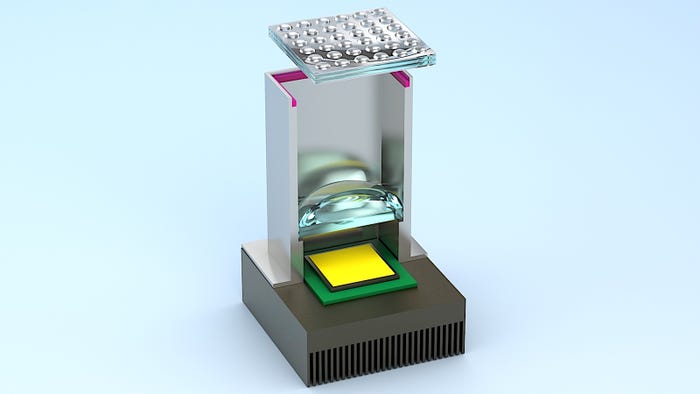
First, let's define "no-compromise." In an ideal configuration, this lamp would use a high-brightness LED (HBLED) that is built into a small, integrated package and is able to produce a large quantity of focused light, operate with a high level of reliability and generate no audible noise. Is this difficult? Yes, but it is possible.
Read More


Design Engineers' Portal for Sensing and Machine Safety
Whatever industry you're in, or whatever product you manufacture, the right sensors to automate your plant, and to improve your overall efficiency, quality and safety are a must. You'll find Banner Engineering to be an amazing resource of products, training and people with expertise.


Test & Measurement World Machine Vision & Inspection Report
Topics include machine-vision software, Power over Camera Link, thermal imaging and frame grabbers. Read More

Design News Partner Zone Directory »

Please visit these other Reed Business sites