You will be redirected to your destination in 10 seconds.

Polling Question
Link This | Email this | Blog This | Comments (4)
Boeing 787 Dreamliner wheels up
Just as the A380 was touching down for the first time on American soil Monday, Boeing, not to be upstaged by rival Airbus, was offering the first quarterly update on the 787 Dreamliner. The message from 787 boss Mike Bair was that unit one of the Dreamliner is on "target" to roll out on 7/8/7 (get it?) and fly for the first time in late August. A year from May, the first commerical deliveries are slated to commence to All Nippon Airways.
Of any single issue, the 80-minute update focused on the innovative materials (a guarded secret) that will comprise the center sections and more than 60% of the fuselage. "We are driven by trying to drive weight out of the composite structures," said Bair, adding that so far, "the laminates have been phenomenal." He acknowledged that Alenia Aeronautica, the Italian company making the composites, was delayed because it had to replant 1,000 olive trees - some four centuries old - that its new factory would be displacing. He said the "catch-up recovery plan" was ahead of schedule and that some center sections had arrived in the Everett, Wash. plant where the 787 will be assembled. And he characterized small delays as caused by problems where "a CNC operator who thought he could do better than the computer."
The GEnx and Trent 1000 engines from GE and Rolls respectively garnered little discussion with Bair characterizing them as "calm and well-behaved." Bair confirmed the engines will be "swappable at the pylon interface." Both are on testbeds now.
Besides that, the plane is 98% designed with about 100 engineers in the field with partners to make last-minute design tweaks which can lead to retooling, which is one of the biggest factors in driving up cost. Bair also said while the plan is fly for the first tiome in late August, the date is neither hard nor fast. "The airplane is ready to fly when it’s ready to fly….it's stupid to pick a [fixed] date," he said, adding that after the first flight, invaribly, "unique quirks" will arise. Five are presently in variously stages of assembly and Boeing is sticking to its forecast that 112 will be made in the first two years of production.
See Beth Stackpole's CAD/CAM Corner blog for a rundown on why the roll-out of the A380 was delayed
for two years. And we'll be doing stories in the next few months on my most of the major engineering aspect as the 787 gets closer to wheels up.
footsteps2727 commented:
787 News I visited the Future of Flight facility at Paine Field in Everett with my nephews on June 22. We went on the tour of the manufacturing space for the 777 and 787. The tour is essentially a viewing area several floors above the factory floor. The viewing area is between the 777 and 787 line. It appeared the main structure for the first 787 airframe is complete. Engine No. 1 appeared to be fully attached and they were attaching engine No. 2 during our tour. The airframe sure looked great. Footsteps2727@yahoo.com
JLArcari commented:
I am interested in gaining more specific defined information concerning the B787 pressurization/air conditioning/cabin environmental system, mainly the supply of conditioned air as delivered by an electrically driven air compressor, in lieu of the usual bleed air supply system. Most info, currently available is superficial at best. Any direction to more definative, comprehensive writings and documents would be greatly aprreciated. (jlarcari@sbcglobal.net)
KOREA RESOURCES commented:
OH SANG-MUK
Doug Smock commented:
One of the really cool aspects of the 787 is the role of suppliers in developing new technology. Competitors (read Airbus) cannot use the technology without express permission from Boeing (read that royalty payments). Leveraging suppliers to develop technology is a relatively new development in corporate America, which used to regard technology as the ultimate in corporate secrets. One exception was the development of the composite-bodied Viper in 1980, when Chrysler had virtually no development money because of financial troubles. The result was unprecedented technical cooperation between suppliers, who could help each other solve problems when their technologies intersected (fiberglass and adhesives in particular).
Sponsored Content
Design News Partner Zones
CAD/CAE Model Clean-Up: Reduce Iterative Cycles
This webinar featured research
and survey results related to problems associated with preparing CAD geometry
for CAE applications. We discussed how
Recipe-Based Automation can help
create "just-in-time" CAE-ready geometry each time a cad model is updated. Watch the Presentation
Light Matters: Systems Level Approach to HBLED illumination applications
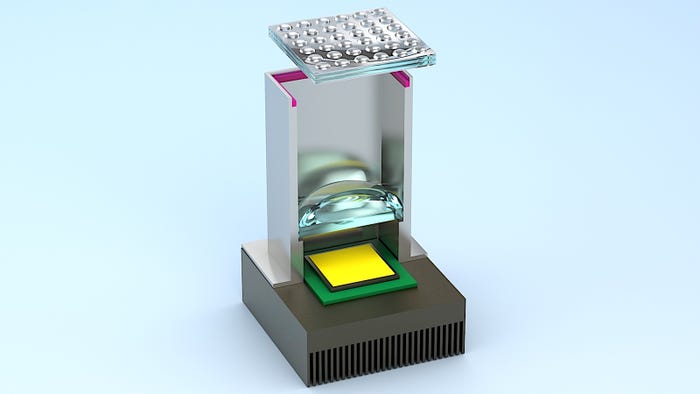
Its good practice to apply a systems-level approach to high-brightness LED (HBLED) illumination applications. Minimally, the system includes the optical, thermal and electrical characteristics of the of the HBLED, the lens (if any) which is built-in to its package, secondary optics such as external plastic lenses/reflectors to direct the light as your application requires and power driver electronics. Read More
Design Engineers' Portal for Sensing and Machine Safety
Whatever industry you're in, or whatever product you manufacture, the right sensors to automate your plant, and to improve your overall efficiency, quality and safety are a must. You'll find Banner Engineering to be an amazing resource of products, training and people with expertise.