After nearly 20 years as an electrical engineer, I suffered two horrible blows last year - literally and figuratively. First, I was hit by a bus and second, my position at a premier semiconductor company was outsourced to penguins in Antarctica. While physically I am in one piece, the bus accident has traumatized me. Symptoms include gadgetary hallucinations and horrid lapses in vocabulary. So I've decided to travel the U.S. looking for new gadgets(hellooo Mid America! Like engineers, farmers are a great source of ingenious gadgets). M-I-C...K-E-Y. Just call me The Gadgeteer (someone should tell the bus company whose bus hit me, there's a gadget called brakes!)
UBC flash drives have become a true fashion accessory. This YouTube video shows a variety of fancy UBC drives, including drives that look like jewelry, hot dogs, hamburgers, doughnuts, even wine bottles.
Here's a gadget designed to stop annoying public cell phone calls. This is the perfect tool for teachers who want to stop the under-the-desk text messaging. Also great for bringing blessed silence to the restaurant.
If you love your gadgets, you can now get clothing designed to hold every werid little electronic product. Here comes the Scott-E-Vest line. How about a jacket that holds an iPod in an inside pocket but lets you control it from the outside?
Take a look at this new technology. Your keyboard may become nothing more than a light image on your desk and your connection may end up entirely wireless with the computer little more than a pocket pen.
Mick Fleetwood of Fleetwood Mac demonstrates the Atari Hotz Box, which is a vest that you can play like drums. The Hotz Box invented by Jimmy Hotz and first manufactured by Atari. Starting with an early Hotz MIDI vest and progressing to the Atari Hotz Box at NAMM shows, this includes show performances by Mick Fleetwood, Jon Anderson, Paul Haslinger, Scott Gershin and other friends.
Here's a nifty gadget that carries your golf bag as you walk the course. Stewart Golf's X3R Remote Golf Caddie runs on its own power and follows you around the course.
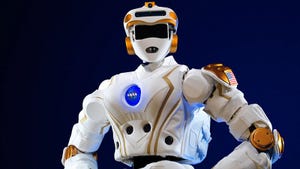
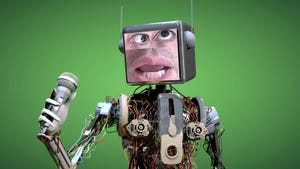
Here’s a fascinating montage of robot applications being previewed at Robo Business 2007. While some have clear utilitarian uses, others try to mimic human and animal movements.
This Ferrofluid is a magnetic fluid. On these towers (one of the features at wired's NEXTFEST 2007) the ferrofluid actually reacts to sound. Soon you will be able to buy these. The white background is actually fluid in a well that has a light shining on it. It seems white because the fluid is incredibly reflective. The bad thing is that they take up a small table and you cant touch them or put metal near them.
Here's a weird one. Shaking wireless gadgets together like a maraca can provide an easier way to pair them up. They compare accelerometer data to check they are shaken together
Read more at: http://technology.newscientist.com/article/dn12912
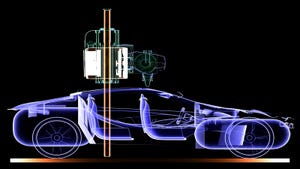
Here's an odd bird -- a flying car prototype. At this point, the 125 kilo contraption can only carry a 10 kilo payload. The gadget is based on the principles of Tesla's flying car.
JUNE 26TH WEBCAST: Collaborative Requirements Engineering
Speed your innovation. Capture the "voice of the customer" and translate customer requests into user requirements that define new products. Find out why the new ENOVIA Requirements Management solution enables organizations to improve their overall global requirements management process. Read More
Mechatronics in action
Successful synergistic integration of controls, electronics, computers and mechanical systems is key to the 21st century design process. Unlock the secrets at the Mechatronics Zone!
Webcast: Sensor Know-How Now
Join our moderator Randy Frank and John Keating from Cognex and explore Solving Industrial Inspection Problems. Read More
Engineering Concept Conduit
Engineering Concept Conduit looks at new products and the components that make them exceptional. Each month we’ll look at a new electronic product and see what makes it tick from an engineering point of view. We’ll explore the design and engineering challenges for the product and examine the components that solved those challenges.
Light Matters: Systems Level Approach to HBLED illumination applications
Its good practice to apply a systems-level approach to high-brightness LED (HBLED) illumination applications. Minimally, the system includes the optical, thermal and electrical characteristics of the of the HBLED, the lens (if any) which is built-in to its package, secondary optics such as external plastic lenses/reflectors to direct the light as your application requires and power driver electronics. Read More