ADVERTISEMENT
You will be redirected to your destination in 10 seconds.
Electronics Industry Search

Polling Question

Should the government bail out U.S. automakers?

  • Yes
  • No


View Previous Poll Results
Advertisement
Email
Print
Reprints/License
RSS
Article tools sponsored by

Medical's 'Mini' Revolution

From microscopic devices to new minimally invasive procedures, less is more when it comes to medical technology

Lawrence D. Maloney, Contributing Editor -- Design News, May 12, 2008

Increasingly, the world of medicine is taking the “minimalist“ route, developing technologies designed to sharply reduce patient discomfort and trauma in applications ranging from diagnostics to surgery.

This “mini” revolution in medical embraces innovative tests that identify diseases faster, reducing anxiety in patients and accelerating treatment. It also includes design of more compact, even microscopic-size instruments and procedures for surgery, which speeds recovery times for patients.

Such developments, according to MarketResearch.com, will fuel the global market for minimally invasive devices and instruments from an estimated $12 billion in 2005 to $18.5 billion by 2011. And this doesn't include commercialization of new devices that will embody new nanomaterials.

Many of these advances, as seen in the following examples, depend on close partnerships between engineers and medical professionals. Their work targets diseases as mundane as the common cold and as deadly as cancer and heart disease.

LAB IN A SHOEBOX

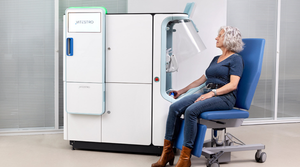
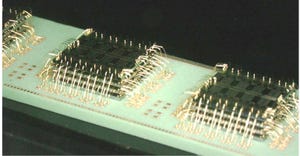
Equipment used to conduct genetic tests for detecting disease typically costs $70,000 or more. Researchers at the University of Alberta, Edmonton, have designed a “lab-on-a-chip device” about the size of a shoebox with components costing just $1,000.

Determined to provide a user-friendly, readily accessible alternative to costly lab tests, Molecular Biologist Linda Pilarski and Electrical Engineer Christopher Backhouse teamed up on a portable microfluidic instrument so inexpensive it may eventually be given away. Target applications: “point-of-care” settings, such as doctor's offices, hospitals, schools, rapid response laboratories and even airports where incoming passengers could be screened for malaria, TB and other contagious diseases.

“The device is highly automated, so it doesn't require a highly skilled operator,” says Pilarski, a researcher at the university's Cross Cancer Institute and Dept. of Oncology. “Chris and I are passionate about getting this low-cost technology into commercial use to help patients.”

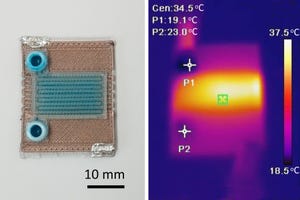
Measuring just 8 x 10 x 12 inches, the device performs biochemical reactions and analytical separations for genetic work within tri-layered glass-PDMS (polydimethylsiloxane) microchips. The microchip itself consists of integrated pneumatically activated valves and pumps for fluid handling, a thin-film resistive element that acts as both a heater and temperature sensor and channels for capillary electrophoresis (CE) — the process of separating ionic species by their charge and frictional forces.

Among other key components in the test platform: high-voltage circuitry for CE; an optical assembly for fluorescent detection, consisting of a laser diode and a charged couple device (CCD) camera; circuitry for thermal control; and minipumps to generate vacuum/pressure for the on-chip, diaphragm-based pumps and valves. The CCD detector images a substantially larger area than the CE channel itself, allowing multi-channel imaging with a change in software.

Backhouse says a prime goal of his Applied Miniaturization lab is to use design innovation to sharply reduce the costs of medical devices. In the case of the microchip platform, he systematically eliminated features that were not needed for the application or substituted economical components, such as the CCD camera, for expensive, high-precision optics. Over the next five years, he sees the medical field as ripe for application of the kind of“Moore's Law thinking” that has made computers and other electronic devices cheaper and more accessible.

Like so many medical innovations today, this “microchip” reader stems from a close partnership between an engineer and a medical specialist. “My research is heavily involved in tests that monitor cancer in patients during their therapy, but a lot of what I do is quite complex, very expensive and requires highly skilled technologists,” says Pilarski. “Then I met Chris Backhouse, who was looking for application areas that needed his miniaturization technology. Together, we were able to accomplish something that neither of us could have done on our own.”

Pilarski sees the device, developed initially for detecting cancers, viruses and malaria, as a useful new tool in the growing trend toward personalized medicine. By allowing more patients to be tested faster, she explains, the device will lead to faster diagnosis and treatment. An Edmonton business development firm called i-LOC will soon begin initial trials at the University of Alberta Hospital, aimed at refining the device's technology. That will be followed by a second round of trials at multiple sites, with the goal of government agency approval and commercialization by early 2010, according to i-LOC CEO Randy Yatscoff. The ultimate goal, Yatscoff says, will be to offer the device at no charge to point-of-treatment sites. Revenues will come from sale of disposable microfluidic chips, expected to be priced in the $20 to $50 range.

PAYOFFS FROM MULTIPLEXING

While Alberta researchers work to get their micro-lab design to market, a world leader in biological testing — Texas-based Luminex — is leveraging a proven test platform to detect multiple diseases from a single sample, once again leading to faster treatment for patients.

Early this year, the FDA cleared for marketing a new Luminex test called the xTAG Respiratory Viral Panel (RVP), which can identify 12 specific viruses, including strains of influenza and pneumonia, from just one swab sample taken from the patient's nasal cavity, throat or sinuses.

The xTAG RVP, developed by Luminex Molecular Diagnostics working with infectious disease specialists at St. Joseph's Hospital in Hamilton, Ontario, features bead-based microarrays capable of combining any set of 100 single DNA tests and performing them simultaneously in a single reaction. This “Universal Array” technology operates on the Luminex xMAP bioassay detection platform, which uses lasers to read color-coded microspheres that attach to specific nucleic acid sequences.

Jeremy Bridge-Cook, vice president of Molecular Diagnostics for Luminex, says this “multiplexing” capability in the xTAG RVP test not only saves time and cuts costs, versus doing a series of tests on patients, but it also substantially increases the chances of pinpointing a diagnosis. “Too often, with previous methods, you don't end up finding out what is causing a respiratory infection,” says Bridge-Cook. “In many cases, one test will be performed, and if it's negative, the conclusion is: 'we don't know what it is.'”

Why the urgency for fast, accurate diagnosis? The Centers for Disease Control states viral infections represent the seventh leading cause of death in the U.S., with associated annual health care costs of $10 billion. In just one of many examples in recent years, inadequate screening led to the deaths of nine infants from respiratory illness in a neonatal intensive care unit before the virus was stopped.

Bridge-Cook says the RVP application is just the beginning, with other disease classes targeted for his company's multiplexing approach. He also sees multiplexing as a valuable tool in personalized medicine, which often requires testing for biomarkers to determine customized drug regimens for individuals. In addition, Luminex is working to expand its capability to spot more pathogens simultaneously with a new platform called FlexMap 3D, which could reach the market in 2009. The new device will be able to analyze 500 bead sets in a single microplate well, versus just 100 for xMAP. Plans call for taking this new technology to the FDA for approval in conjunction with a new assay for multiple pathogens.

SAFETY NET FOR THE HEART

Heart failure — the inability to efficiently pump blood to vital organs — is the leading cause of hospital admissions in the U.S., according to the American Heart Assn. Each year, more than 300,000 Americans die from the disease, despite the use of biventricular pacemakers and various drug regimens, such as beta-blockers.

Some patients with advanced heart failure may be candidates for implants, known as ventricular assist devices (VADs), which aid the natural heart in pumping blood. However, VAD procedures are both invasive and expensive — $75,000 to $100,000 — and are still often used only temporarily until a donor heart is available for transplant.

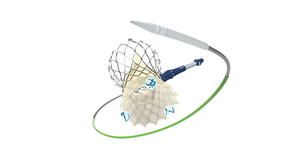
Paracor Medical, a California company, is targeting heart failure patients whose disease has not yet progressed to advanced stages with a less invasive technology it calls the HeartNet ventricular support system. Made of nitinol, a nickel titanium alloy, the expandable, mesh-like device is wrapped around the ventricles of the failing heart, in effect creating a gentle squeeze that reduces the work the heart must perform. It is also designed to halt or even reverse the progressive enlargement of the ventricles, which further weakens the heart.

The operation takes about 90 minutes and is performed on a beating heart, so by-pass equipment is not needed. And rather than an open-chest procedure, the surgeon makes only a small incision in the rib cage, through which he inserts an introducer sheath containing the HeartNet delivery system.

Peter Martin, Paracor's chief technology officer, says HeartNet is now undergoing phase III clinical trials that will eventually involve 272 patients at 30 sites around the country. After six months, patients receiving the device will be evaluated on such criteria as quality of life, peak oxygen consumption and distance traveled during a six-minute walk.

A January 2008 paper in the Journal of Thoracic and Cardiovascular Surgery, co-authored by several surgeons using the device in trials, reported six-month data on 51 patients. Their conclusion: the device provided a functional and clinical benefit, including a trend toward reverse remodeling (the process of returning the heart to more normal dimensions).

In a report from one hospital that has worked with the device in early trials — Pittsburgh's Allegheny General Hospital — cardiovascular surgeon Stephen Bailey noted: “The HeartNet device offers an intriguing, less-invasive option for patients with severe heart failure. It has the potential to halt and reverse progressive deterioration in heart function, thereby avoiding the need for more invasive end stage therapies, such as left ventricular assist devices and heart transplantation.”

Beyond its initial application as a support device, HeartNet might also serve as a platform for other therapies. “We have trials in Europe that feature the use of HeartNet with integrated defibrillation electrodes,” says Martin. “In addition, we've talked about using our harness for ventricular pacing by linking it to an implanted pulse generator, as well as using it in sensing and in drug delivery.”

VIRTUAL COLONOSCOPY COMES OF AGE

This year, more than 56,000 Americans will die from colon cancer and nearly 150,000 new cases will be diagnosed, according to the American Cancer Society. Yet, the majority of people over 50 still balk at the costs and discomfort of undergoing a colonoscopy, the proven “gold standard” for detecting polyps that can become cancerous. In this procedure, which requires the patient be sedated, a gastroenterologist inserts a long, flexible tube into the rectum. A tiny video camera at the tip of this instrument allows the doctor to inspect the inside of the colon for abnormalities.

Now, new evidence from major clinical trials shows a less invasive technique, “virtual colonoscopy” (VC), may be just as effective, while costing less than a third of the $3,000 typically charged for doctor and hospital services with traditional optical colonoscopies. In the VC approach, no sedation is needed. A small amount of air is introduced into the colon and X-rays delivered through a CT scanner take cross sectional views of the abdomen. Within minutes, computer software from such companies as Viatronix reconstructs the images into a 3-D model of the colon for analysis by the physician.

Last fall, researchers at the University of Wisconsin Medical School reported in the New England Journal of Medicine the results of a study of about 6,300 patients — about half of whom underwent virtual colonoscopies, while the other half had the traditional test. The result: about the same number of advanced polyps were found in each group, leading one of the researchers to pronounce that the VC technique “is ready for prime time.”

Companies involved in developing VC technology say the results of the Wisconsin study, as well as findings from a 15-site federally funded study, could soon pave the way for widespread insurance coverage of the procedure for cancer screening. Now, VC is used only on a limited basis for diagnostics in patients unable to undergo conventional colonoscopies because of bleeding or other problems. Federal legislation was also introduced last December to have virtual colonoscopies covered by Medicare.

“Virtual colonoscopy has advanced over the last year from the realm of people asking whether it really works to the point where it has been shown to be just as effective as optical colonoscopy,” says Maha Sallam, founder of New Hampshire-based iCAD. Her company's CT Colon product, based on pattern recognition technology, automatically analyzes CT images of the colon from the VC procedure and pinpoints abnormal areas of density or mass that need closer examination for potential polyps.

In January, iCAD announced an agreement with ACR Image Metrix, a subsidiary of the American College of Radiology, to conduct clinical studies of the CT Colon product to pave the way for FDA approval. “It is clear from the low compliance levels that we need more options in colon cancer screening,” says Dr. Bruce Hillman, director of Scientific Affairs for ACR Image Metrix.

SMALL IS BEAUTIFUL

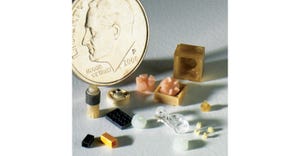
Elsewhere, researchers are pioneering development of new microsurgical devices, as well as new nanomaterials targeted for medical applications.

At UCLA, for example, a team headed by mechanical engineering professor Chang-Jin Kim has developed a microhand, which functions very much like a Venus flytrap, collapsing around an object. Just 1-mm wide, the device features four silicon “fingers,” together with polymer “muscles” that manipulate the fingers by increasing or decreasing air pressure. Working with the UCLA researchers, Intelligent Optical Systems, Torrance, CA, is developing a larger version of the hand, about 5-mm wide, which could be used for such applications as removing objects from a child's esophagus.

In Virginia, Luna Innovation, an R&D company, has formed a partnership with Intuitive Surgical, developer of the da Vinci robotic surgery system, to explore the integration of Luna's fiber-optic shape sensors in minimally invasive surgery.

This technology uses a fiber-optic sensing technique called Optical Frequency Domain Reflectometry (OFDR). In this technique, a laser spectrally interrogates fiber Bragg sensors along a fiber with thousands of sensors at very high spatial resolution. The reflected light from these elements is then detected, demodulated and analyzed. Using advanced algorithms, the strain differential as seen by the fiber-optic sensors calculates the bends at every discrete element along the length. Because of the sensor density, the data from each individual sensing element can be integrated to reconstruct the total shape of the fiber.

In minimally invasive operations, surgeons pass an endoscope and miniature instruments through cannulae and then use a special viewer to monitor the operating field inside the body. If instruments were to be equipped with Luna's shape-sensing technology, researchers believe, surgeons would get a more precise feel for the location of these surgical devices inside the patient's body.

Among other breakthroughs in this widespread trend toward medical miniaturization, Luna also has developed a new nanomaterial called Trimetasphere, a potential new contrast agent for medical imaging. Composed of a fullerene sphere of 80 carbon atoms enclosing three metal atoms and one nitrogen atom, the material could improve the signal-to-noise ratio of magnetic resonance imaging, allowing MRI to be used in applications where the only available option is radiation, which can cause cancer.

“Trimetasphere is a platform technology that could produce many new contrast agents and expand the use of MRI to improve the management of diseases where it is not currently used,” says Robert Len, president of Luna's nanoWorks division.

That, in essence, is the heart of the medical field's “mini revolution” — new designs and discoveries that are dramatically changing treatment modes and improving outcomes for patients.

Advertisement

Sponsored Content

Technology Marketplace

Gallery »

Medical's 'Mini' Revolution

From microscopic devices to new minimally invasive procedures, less is more when it comes to medical technology

Email
Print
Reprints/License
RSS
Article tools sponsored by
Find a supplier on oemsuppliersearch.com

Talkback


We would love your feedback!


» Submit talk back
Advertisement

DN's Resource Center Get Free Information, Made Easy

Advertisement

Design News Partner Zones

AnarkCAD/CAE Model Clean-Up: Reduce Iterative Cycles
This webinar featured research and survey results related to problems associated with preparing CAD geometry for CAE applications.  We discussed how Recipe-Based Automation can help create "just-in-time" CAE-ready geometry each time a cad model is updated. Watch the Presentation


Light Matters: Systems Level Approach to HBLED illumination applications
Its good practice to apply a systems-level approach to high-brightness LED (HBLED) illumination applications. Minimally, the system includes the optical, thermal and electrical characteristics of the of the HBLED, the lens (if any) which is built-in to its package, secondary optics such as external plastic lenses/reflectors to direct the light as your application requires and power driver electronics. Read More


Design Engineers' Portal for Sensing and Machine Safety
Whatever industry you're in, or whatever product you manufacture, the right sensors to automate your plant, and to improve your overall efficiency, quality and safety are a must. You'll find Banner Engineering to be an amazing resource of products, training and people with expertise.

Design News Partner Zone Directory »

Please visit these other Reed Business sites