Skip navigation
Electronics Industry Search
Advertisement
RSS
Reprints/License
Print
Email

Siemens Gets CAD Modeling in Sync

Touts new synchronous technology as first history-free, feature-based modeling approach

Beth Stackpole, Contributing Editor -- Design News, April 23, 2008

The hot topic for debate in the CAD world this past year has been the merits of history-based, parametric software compared to those of direct modelers. Enter Siemens PLM Software, which this week announced new technology it claims marries the best of both options, giving engineers the freedom of a direct modeling approach with the controls and automation of traditional parametric processes.

The new synchronous technology, which Siemens touts as “the first history-free, feature-based modeling technology,” is a proprietary application layer built on top of Siemens’ D-Cubed and Parasolid software. It will be commercially available in the next versions of Solid Edge and NX, due out this July.

“It’s a new way of interacting with parametric, history-based models without being confined by the way the model was constructed,” says Chuck Grindstaff, executive vice president of products for Siemens PLM Software. “It instantly synchronizes and doesn’t require memorizing the idiosyncrasies of complex CAD systems — it provides direct control of the model and immediate feedback.”

Siemens, along with competitors PTC and SolidWorks, have over the last year or so been adding direct modeling capabilities to their traditionally history-based CAD tools in response to user demand and pressure from upstarts like SpaceClaim and CoCreate Software (now owned by PTC). The latter offer products that allow engineers to easily model and refine designs simply by pushing and pulling components — an approach they claim offers greater flexibility in terms of enabling innovation.

While history-less modeling lets engineers work on geometry in an unconstrained manner, the approach sacrifices intelligence and intent. On the other hand, traditional parametric CAD systems apply rules to geometry to help automate planned changes, yet they complicate matters when unanticipated engineering changes arise. Given their respective strengths and weaknesses, some say direct modeling systems are a better fit for R&D environments and during the conceptual phase of design, while history-based systems are better suited for designing complex products that use families of similar parts.

With synchronous technology, Siemens claims engineers no longer have to make a choice. “This combines the benefits of constraints and dimensional-driven modeling without the overhead of the history tree and with the flexibility of history-less modelers,” Grindstaff says.

The technology also allows users to enjoy the benefits of both approaches when reusing data from other CAD systems without remodeling. For example, a technique called “suggestive selection” automatically infers the function of various design elements without requiring feature or constraint definitions.

Siemens officials say they recognized the importance of the synchronous technology, at the time in the R&D lab, during the due diligence process when acquiring UGS. As a result, the company put more R&D money behind the project and fast-tracked the development schedule so it could be released this year.

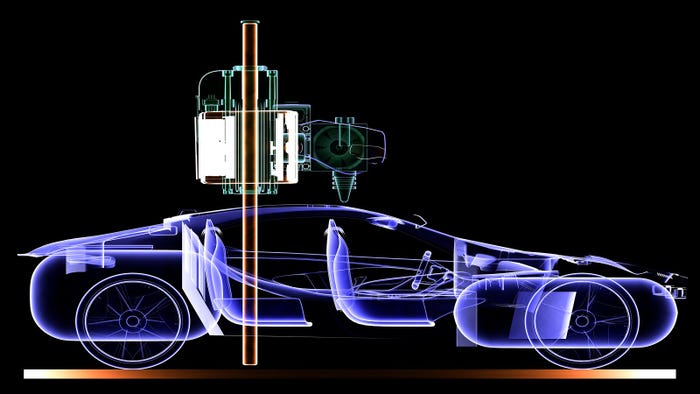
Synchronous Technology enables CAD software to automatically recognize geometric conditions such as symmetry.
Advertisement

Sponsored Content

Technology Marketplace

RSS
Reprints/License
Print
Email
Find a supplier on oemsuppliersearch.com

Advertisement
Reed Business Information Resource Center

Featured Company


Advertisement

Design News Partner Zones

Light Matters: The Unsung Heroes of Modern Health Care
First, let's define "no-compromise." In an ideal configuration, this lamp would use a high-brightness LED (HBLED) that is built into a small, integrated package and is able to produce a large quantity of focused light, operate with a high level of reliability and generate no audible noise. Is this difficult? Yes, but it is possible.
Read More


Design Engineers' Portal for Sensing and Machine Safety
Whatever industry you're in, or whatever product you manufacture, the right sensors to automate your plant, and to improve your overall efficiency, quality and safety are a must. You'll find Banner Engineering to be an amazing resource of products, training and people with expertise.


Test & Measurement World Machine Vision & Inspection Report
Topics include machine-vision software, Power over Camera Link, thermal imaging and frame grabbers. Read More

Design News Partner Zone Directory »

Please visit these other Reed Business sites