Skip navigation
Electronics Industry Search
Advertisement
Email
Print
Reprints/License
RSS

Automotive Goes Plug-and-Play

As the focus of vehicle design changes from mechanical to electronic, automakers are learning to let drivers dock mobile consumer products in the vehicle

Charles J. Murray, Senior Technical Editor -- Design News, November 19, 2006

It all started with an audio jack. After years of struggles, unmitigated failures and fitful stops and starts, the future of infotainment all boiled down to a barely visible, three-and-a-half millimeter, audio adaptor jack on the dashboard. Plug an MP3 player in the jack and — Eureka! — you've joined the new world of automotive infotainment.

The jack — which just began to appear on production vehicles — represents a change of extraordinary proportions for automakers. This is, after all, the industry that tried to “up-integrate” hard-wired phones, PCs and e-mail into its vehicles and failed painfully.

But the simple audio jack represents a new beginning. Automakers are using it as a foundation of change for their infotainment business model. Chevrolet, for example, recently rolled out a vehicle with an iPod adaptor and associated dashboard display. With the dash display, drivers can select tunes while they drive. By the end of 2007, GM expects to make the iPod adaptor available on 56 of its models. Not to be outdone, Ford and Lincoln Mercury are offering auxiliary input jacks on 14 car models and will soon roll out TripTunes, a system that will allow drivers to play iPods stored in a vehicle's glove box.

The idea behind it all is simple: Bring your mobile devices into the vehicle. Having been burned by past failures, the auto industry is being exceptionally careful about what gets hard-wired into the vehicle. The reason: Electronic production cycles are measured in months, while automotive production cycles are measured in years. When automakers integrate an electronic device, they run the risk of that device being obsolete shortly after the vehicle hits the streets.

“Anyone who thinks they can plan that far out is really naïve or just wrong,” notes Scott Morrison, infotainment engineering group manager for General Motors. “There's no way to predict what the industry will rally around, especially when it comes to portable consumer electronics devices.”

Consumer Driven

To be sure, the trend toward mobile devices in vehicles stretches far beyond iPods and MP3 players. Tier-one automotive suppliers are increasingly targeting their products at the aftermarket, and at an ever-expanding gray area between the OEM and aftermarket, which calls for automakers to build an electrical foundation for mobile consumer products. As a result, all kinds of electronic products are entering the vehicle through non-traditional channels. Navigation devices, memory sticks, DVD players, hands-free phone kits, CD systems and satellite radios are part of that new breed of products, along with the iPods and MP3 players.

“The consumer is driving all this, and that's a huge change for the auto industry,” says Thilo Koslowski, automotive analyst and vice president of research for Gartner Dataquest. “It means that the automaker can't always be the innovator driving the technology.”

It also means that vehicle designers face a new set of technical challenges.
To create a foundation for those products, designers must first select the proper interfaces, whether they be Bluetooth, USB (Universal Serial Bus), or another proprietary technology, such as the iPod interface. Then, they must integrate those interfaces into vehicles amid a lack of industry standards, while dealing with electrical architecture issues and content compatibility.

“Once you go beyond the sophistication of a simple audio auxiliary jack, you have challenges,” says Jay Adams, global marketing manager for Delphi Corp., a tier-one automotive supplier. “If you have a USB connection on the front of the radio, for example, vehicle designers have issues of potential head impact and airbag interference.” Adams adds that memory sticks are also a concern because designers fear that drivers will bump the stick and break the connector.

At the recent Convergence Automotive Electronics Conference in Detroit, Delphi dealt with two of those issues by rolling out a lighted USB plug that enables drivers to see the memory stick more easily. The Delphi connector is also designed so if it is inadvertently damaged, it can be easily replaced.

Moreover, standards for such efforts are now emerging. A Consumer Electronics Association working group, for example, is putting together a standard USB interface for vehicles.

The protracted length of the automotive qualification time, however, is leading some electronics manufacturers to take leading edge technology to the aftermarket. Texas Instruments, for example, recently unveiled a hands-free car kit to the aftermarket, mainly because it is based on a cutting edge version of Bluetooth that's not yet automotive-qualified. Using Bluetooth EDR (Enhanced Data Rate) and a new stereo codec, the technology offers audio-streaming capabilities that enable iTunes or MP3 files to be played over its wireless link. TI also claims that the technology offers better echo cancellation and noise reduction than current hands-free kits, which is another reason it wants the technology on the market today, instead of in two years.
“The aftermarket is the fastest growing automotive segment at the moment,” says John Dixon, Texas Instruments' low power DSP marketing manager. “So we put our latest technology — the technology that isn't automotive-qualified yet — into that market. To get this into a production vehicle would have taken 18 to 24 months of cycle time.” Dixon adds that TI's new hands-free phone kit is available now for about $150 plus $75 for installation, whereas hands-free systems for production vehicles are running closer to $2,000, while using older technology.

Changing Focus

For their part, automotive electronics suppliers are helping auto companies bring consumer products to market faster by working with them up front. Freescale Semiconductor, for example, creates so-called “sockets” — 32-bit microcontrollers with scalable architectures that will be just as relevant in seven years as they are today. By doing so, Freescale can improve the performance of future devices without changing the essential architectures, thus making it easier for automakers to plan for the future.

“We share what we're thinking with the automotive engineers,” says Mike Bryars, Freescale's manager for infotainment, multimedia and telematics. “As we learn more, we will firm up the definitions of our parts for 2008, 2009 and even 2010 and 2011.” Bryars says doing so enables automakers to cut 18-24 months from their lead times, in some cases.

Software suppliers are also rolling out plug-and-play products that help cut lead times. QNX Software Systems, for example, recently announced a middleware product targeted at in-car multimedia devices. Known as the QNX Multimedia Solution, the software harnesses the intelligence of iPods and other connected devices by enabling an auto to identify CDs, DVDs or USB Flash disks. It then synchronizes content from media sources and provides a host of user features, including: ability to create personalized playlists across multiple media sources; simultaneously playing and recording content from the same media; and enabling some passengers to listen to music while others watch DVDs. Experts say that such features could be developed by in-house engineers, but not in the compressed timeline required by multimedia consumers. Therefore, by working with vendors who understand the multimedia world, automakers cut months off their development cycles and remain competitive.

Industry analysts argue that such techniques are absolutely critical where consumer electronics are concerned, even though they may not be necessary in the more traditional areas of automotive design.

In some cases, automakers have even met with supplier groups to give them a closer look at their vehicles. Vendors associated with the Specialty Equipment Manufacturers Association (SEMA), for example, have met with Ford engineers in an effort to get a head-start on product creation.

“We have measuring sessions where SEMA suppliers get a chance to come in and work directly with automakers,” says John Waraniak, vice president of vehicle technology for SEMA. “Our suppliers look at the vehicles, take them apart, and make sure that our products integrate with their vehicles. This wouldn't have happened 10 years ago, but it's necessary today.”

Industry analysts say such measures are necessary and overdue. Automakers, they say, for years have needed to reach out to the electronics industry and work more closely with it. But it was only through repeated failure that they began to better understand it. Lessons learned by Honda, Chrysler and GM — all of which installed hard-wired phones into vehicles — taught the value of electronic flexibility.

That's why today's automotive CEOs are beginning to team with electronics suppliers. Suppliers, meanwhile, are talking to consumers.

“We do research with new car buyers,” notes Adams of Delphi. “We ask them questions about the products in their cars and we ask them what they use at home. Do they have broadband? Do they have wireless? We've determined that new car buyers are very connected.”

That phenomenon, coupled with the exceptionally short cycle times of the consumer electronics world, has led industry experts to conclude that automakers need to go further in creating an electrical vehicle architecture that's friendly to mobile consumer devices. Some are suggesting that automakers equip future vehicles with electronic hubs or gateways, and couple those hubs with centralized controllers capable of managing all the incoming signals.

“There are still too many automotive CEOs who get more excited about very small sheet metal gaps than about the latest technology in the vehicle,” notes Koslowski of Gartner Dataquest. “Their focus needs to change from mechanical to electronics, and that isn't happening yet in the industry.”

Automakers and tier-one suppliers are being more careful about up-integration of consumer electronics, however. They want to see technological maturity and high market penetration, even when considering the integration of interfaces, such as USB or Bluetooth.

“There are more challenges than just lead times,” notes Morrison of GM. “We're talking about a 10-year projected life of a vehicle, so it's very important that when we introduce something, it has relevance in the market place for that entire time.”


Useful Links
//Check out the link below for more info//
Advertisement

Sponsored Content

Technology Marketplace

Gallery »

Automotive Goes Plug-and-Play

As the focus of vehicle design changes from mechanical to electronic, automakers are learning to let drivers dock mobile consumer products in the vehicle

Email
Print
Reprints/License
RSS
Find a supplier on oemsuppliersearch.com

Talkback
Advertisement
Reed Business Information Resource Center

Featured Company


Advertisement

Design News Partner Zones

Light Matters: The Unsung Heroes of Modern Health Care
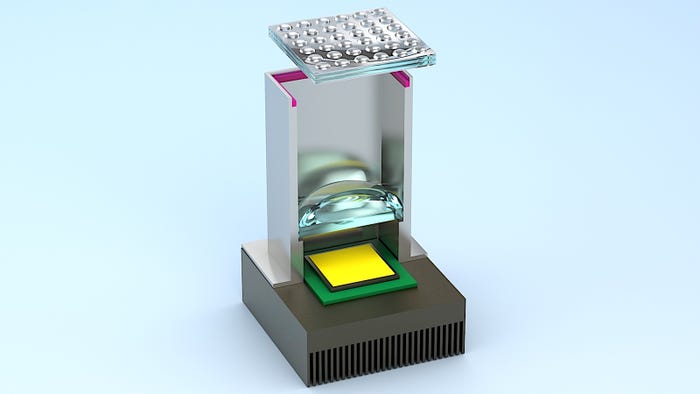
First, let's define "no-compromise." In an ideal configuration, this lamp would use a high-brightness LED (HBLED) that is built into a small, integrated package and is able to produce a large quantity of focused light, operate with a high level of reliability and generate no audible noise. Is this difficult? Yes, but it is possible.
Read More


Design Engineers' Portal for Sensing and Machine Safety
Whatever industry you're in, or whatever product you manufacture, the right sensors to automate your plant, and to improve your overall efficiency, quality and safety are a must. You'll find Banner Engineering to be an amazing resource of products, training and people with expertise.


Test & Measurement World Machine Vision & Inspection Report
Topics include machine-vision software, Power over Camera Link, thermal imaging and frame grabbers. Read More

Design News Partner Zone Directory »

Please visit these other Reed Business sites