Electronics Industry Search

Polling Question

Green design is a priority for me in 2009.

  • Yes
  • No


View previous polls
Advertisement
Email
Print
Reprints/License
RSS
Article tools sponsored by

Visualizing Step Motor Differences

NEMA defines sizes, but applications can dictate modified and custom versions

Salleh Ahshim and Mindy Cheng, contributing writers -- Design News, March 19, 2007

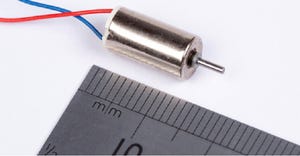
In the motion control industry, step motors have a wide variety of uses. To accommodate these applications, manufacturers offer step motors in various sizes and with various mechanical specifications. In terms of size, step motor manufacturers adhere to various NEMA frame sizes. These sizes range from the miniature NEMA 8 to the large NEMA 42. Each of these motors, in turn, has its own distinct performance characteristics. Smaller motors such as the NEMA 8 or 11, for instance, are meant for high-speed applications that do not require a lot of torque. Larger motors such as the NEMA 34 or 42, on the other hand, are beneficial for applications that require high torque at slower speeds.

Mechanically, the difference between step motors will exist within the motor. This difference will determine whether a motor will operate at either a 0.9- or a 1.8-degree step angle. Similar to frame size selection, users will choose a step motor based on specific needs. A 0.9-degree motor would be better for applications that require high accuracy and a 1.8-degree motor would be more appropriate for applications that require more torque. A motor with a 0.45-degree step angle provides high precision and satisfies applications requiring smooth motion. Considering these performance trade-offs is very important when choosing a motor.

Traditionally, the main difference between one step motor versus another would involve its frame size, step angle and the specific motor manufacturer's capabilities. Some manufacturers go further and create custom motors based on the needs of the specific user.

Different capabilities of the step motor manufacturer, such as engineering, design and product expertise, will affect the types of customizations the manufacturer is able to produce. Not all step motors are created equal, and it is important to note that the same goes for motor manufacturers as well. While some are able to create various types of customizations, others might be limited. The following discusses three types of step motors that one manufacturer, Lin Engineering, produces.
Step motor engineers can face a wide variety of step motor applications for various industries. These industries include: avionics, medical equipment, surveillance, semiconductor, engraving, packaging and so forth. Each industry has its own specific requirements and, in many cases, the step motors have significant visual differences. Engineers at Lin Engineering have characterized these broad requirements into three distinct categories:


1. Traditional or Standard (Refer to 1, 2 and 3) Motors that are routinely manufactured and can, in essence, be purchased as an “off-the-shelf” type of product.

2. Modified (Refer to 4 and 5) Motors that require minimal to moderate customizations such as a special shaft, housing, connectors or special materials.
3. Ultra-Custom (Refer to 6) Motors that require a substantial amount of engineering time and expertise.

APPLICATION-SPECIFIC

(additional information)

A motor developed for an aircraft application required opening and closing an air conditioning (AC) vent. In this application, size, torque, position feedback and price were major concerns. The size constraint called for a NEMA 11 motor but the required torque was a lot higher than what the NEMA 11 can produce. In order to achieve the desired torque with such a small motor, engineers designed a custom gearbox that would both mount onto the NEMA 11 motor frame and adhere to the customer's size constraint.

Since the motor was going to be used to open and close the AC vent a certain distance, position feedback was also necessary. An analog encoder was determined to be a feasible solution, but this device proved to be too costly and would not meet the customer's expense budget. A potentiometer mounted onto the gearbox met both the cost and performance requirements. Spinning the motor would turn the potentiometer and provide a voltage anywhere from 0.1 to 5V dc. Once the correlation between motor steps and potentiometer voltage was determined, positions of the AC vent were then correlated to the voltage. This relationship was then used to move the motor the desired number of steps until a certain voltage amount was read and, in turn, located the AC vent in the desired position. The relationship between motors steps, potentiometer voltage and AC vent position formed the closed loop system the customer desired.

Specification/NEMA Size 8 11 14 17 23 34
Frame Size (diameter in inches) 0.8 1.11 1.39 1.58 2.25 3.39
Holding Torque Range (oz-in) 3 to 4 9 to 17 7 to 20 8 to 93 100 to 294 310 to 1,288
Max. Radial Load (lb) 4.5 6.3 6 6 15 24
Max. Axial Load (lb) 0.45 2.25 6 6 13 22
NEMA ratings for size 8 to 34 (and even the 42) are essentially the motor diameter times 10. As a result, a higher rating normally means higher holding torque but a range of values provides overlap. Also, the higher rating allows a greater maximum axial load.
Useful Links
//Check out the links below for more info//
Servo vs. Stepper Motors (What's the Difference and How Does Each Work?) Quick Start for Beginners to Drive a Stepper Motor  
  • related stories
  • resource center
  • by this author


Advertisement

Sponsored Content

Technology Marketplace

Gallery »

Visualizing Step Motor Differences

NEMA defines sizes, but applications can dictate modified and custom versions

Email
Print
Reprints/License
RSS
Article tools sponsored by
Find a supplier on oemsuppliersearch.com

Advertisement

DN's Resource Center Get Free Information, Made Easy

Advertisement

Design News Partner Zones

AnarkCAD/CAE Model Clean-Up: Reduce Iterative Cycles
This webinar featured research and survey results related to problems associated with preparing CAD geometry for CAE applications.  We discussed how Recipe-Based Automation can help create "just-in-time" CAE-ready geometry each time a cad model is updated. Watch the Presentation


Light Matters: Systems Level Approach to HBLED illumination applications
Its good practice to apply a systems-level approach to high-brightness LED (HBLED) illumination applications. Minimally, the system includes the optical, thermal and electrical characteristics of the of the HBLED, the lens (if any) which is built-in to its package, secondary optics such as external plastic lenses/reflectors to direct the light as your application requires and power driver electronics. Read More


Design Engineers' Portal for Sensing and Machine Safety
Whatever industry you're in, or whatever product you manufacture, the right sensors to automate your plant, and to improve your overall efficiency, quality and safety are a must. You'll find Banner Engineering to be an amazing resource of products, training and people with expertise.

Design News Partner Zone Directory »

Please visit these other Reed Business sites